
Water and Sanitation


What’s Inside
• In rural areas, septic tank/flush latrine was used by 18 per cent households as compared to 77 per cent households in urban areas.
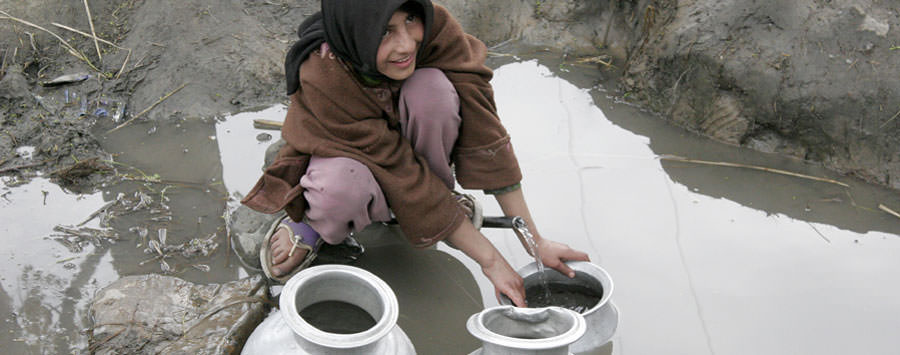
According to Progress on Sanitation and Drinking-Water: 2010 Update (WHO and UNICEF), http://www.unicef.org/media/files/JMP-2010Final.pdf: • Use of improved sanitation facilities is low in Sub-Saharan Africa and South Asia. • Among the 2.6 billion people in the world who do not use improved sanitation facilities, by far the greatest number are in Southern Asia, but there are also large numbers in Eastern Asia and Sub-Saharan Africa. • 61% of global population uses improved sanitation facilities • Unless huge efforts are made, the proportion of people without access to basic sanitation will not be halved by 2015. Even if we meet the MDG target, there will still be 1.7 billion people without access to basic sanitation. If the trend remains as currently projected, an additional billion people who should have benefited from MDG progress will miss out, and by 2015, there will be 2.7 billion people without access to basic sanitation. • 672 million people will still lack access to improved drinking-water sources in 2015. • Sub-Saharan Africa faces the greatest challenge in increasing the use of improved drinking-water. 884 million people – 37% of whom live in Sub–Saharan Africa – still use unimproved sources for drinking-water • In China, 89% of the population of 1.3 billion uses drinking-water from improved sources, up from 67% in 1990. In India, 88% of the population of 1.2 billion uses drinking-water from such sources, as compared to 72% in 1990. China and India together account for a 47% share, of the 1.8 billion people that gained access to improved drinking-water sources between 1990 and 2008. • For sanitation, even with the increase between 1990 and 2008 in the proportion of the population using improved sanitation facilities in China (from 41% to 55%) and India (from 18% to 31%), the world is not on track to meet the sanitation target. This is despite the fact that 475 million people gained access to improved sanitation in these two countries alone, a 38% share of the 1.3 billion people that gained access globally. • Of the approximately 1.3 billion people who gained access to improved sanitation during the period 1990-2008, 64% live in urban areas. • Worldwide, 87% of the population gets their drinking-water from improved sources, and the corresponding figure for developing regions is also high at 84%. While 94% of the urban population of developing regions uses improved sources, it is only 76% of rural populations. • The rural population without access to an improved drinking-water source is over five times greater than that in urban areas. Of almost 1.8 billion people gaining access to improved drinking-water in the period 1990-2008, 59% live in urban areas. The urban-rural disparities are particularly striking in Sub-Saharan Africa, but are also visible in Asia and Latin America. • The proportion of the world population that practises open defecation declined by almost one third from 25% in 1990 to 17% in 2008. A decline in open defecation rates was recorded in all regions. In Sub-Saharan Africa, open defecation rates fell by 25 per cent. In absolute numbers, the population practising open defecation increased, however, from 188 million in 1990 to 224 million in 2008. In Southern Asia, home to 64% of the world population that defecate in the open, the practice decreased the most – from 66% in 1990 to 44% in 2008. • Between 1990 and 2008, more than 1.2 billion people worldwide gained access to a piped connection on premises. • In developing regions, while 73% of the urban population uses piped water from a household connection, only 31% of rural inhabitants have access to household piped water supplies. • For families without a drinking-water source on the premises, it is usually women who go to the source to collect drinking-water. Surveys from 45 developing countries show that this is the case in almost two thirds of households, while in almost a quarter of households it is men who usually collect the water. In 12% of households, however, children carry the main responsibility for collecting water, with girls under 15 years of age being twice as likely to carry this responsibility as boys under the age of 15 years.
|






Write Comments