
Water and Sanitation


What’s Inside
According to the study titled Combating Waterborne Disease at the Household Level (2007), prepared by The International Network to Promote Household Water Treatment and Safe Storage and WHO, http://www.who.int/household_water/advocacy/combating_disease.pdf: According to the 11th Five Year Plan
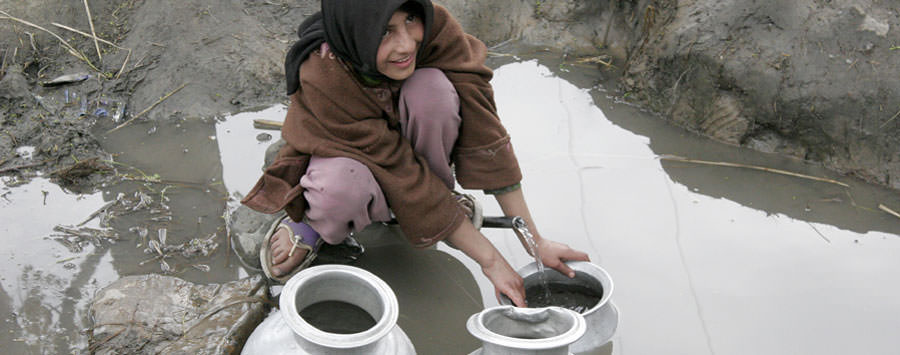
 The status of provision of water and sanitation has improved slowly. According to Census 1991, 55.54% of the rural population had access to an improved water source. As on 1 April 2007, the Department of Drinking Water Supply’s figures show that out of a total of 1,50,7349 rural habitations in the country, 74.39% (11,21,366 habitations) are fully covered and 14.64% (2,20,165 habitations) are partially covered.  Present estimates shows that out of the 2.17 lakh water quality affected habitation as on 1.4.05, about 70,000 habitations have since been addressed for providing safe drinking water.  The access to toilets is even poorer. As per the latest Census data (2001), only 36.4% of the total population has latrines within or attached to their houses. However in rural areas, only 21.9% of population has latrines within or attached to their houses. An estimate based on the number of individual household toilets constructed under the TSC programme (a demand-driven programme implemented since 1999) puts the sanitation coverage in the country at about 49% (as on November 2007).  An evaluation study on the programme conducted in 2002 shows 80% of toilets constructed were put to use. This use is expected to be much higher as awareness has improved much since 2002.  The GoI’s major intervention in water sector started in 1972–73 through Accelerated Rural Water Supply Programme (ARWSP) for assisting States/Uts to accelerate the coverage of drinking water supply. In 1986, the entire programme was given a mission approach with the launch of the Technology Mission on Drinking Water and Related Water Management. This Technology Mission was later renamed as Rajiv Gandhi National Drinking Water Mission (RGNDWM) in 1991–92.  In 1999, Department of Drinking Water Supply (DDWS) was formed under the MoRD to give emphasis to rural water supply as well as on sanitation. In the same year, new initiatives in water sector had been initiated through Sector Reform Project, later it was scaled up as Swajaldhara in 2002. With sustained interventions, DDWS remains an important institution to support the States/UTs in serving the rural population with water and sanitation related services all across India.  There are about 2.17 lakh quality-affected habitations in the country with more than half of the habitations affected with excess iron (118088). This is followed by fluoride (31306), salinity (23495), nitrate (13958), arsenic (5029) in that order. There are about 25000 habitations affected with multiple problems.  About 66 million population is at risk due to excess fluoride in 200 districts of 17 States. Arsenic contamination is widespread in West Bengal and it is now seen in Bihar, eastern UP, and Assam. The hand pump attached de-fluoridation and iron removal plants have failed due to in appropriate technology unsuited to community perceptions and their involvement. Desalination plants have also met a similar fate due to lapses at various levels starting with planning to post implementation maintenance.  To ‘provide clean drinking water for all by 2009 and ensure that there are no slip-backs by the end of the Eleventh Plan’ is one of the monitorable targets of the Eleventh Five Year Plan. The first part of the goal coincides with the terminal year of Bharat Nirman Programme under which it is proposed to provide safe drinking water to all habitations. Under the Bharat Nirman Programme 55,067 not covered habitations, 2.8 lakh slipped back habitations, and 2.17 lakh quality-affected habitations are proposed to be covered.
|



Write Comments