About Us

Dr. Shah’s expertise on water resources management has been sought out by government. In 2015 a committee led by him recommended the disbanding of the Central Water Commission and the Central Ground Water Board and replacing them with a multi-disciplinary National Water Commission. In 2019 Madhya Pradesh asked Dr. Shah to devise a new water strategy for the state, and the same year he was asked by Government of India to draft a National Water Policy.
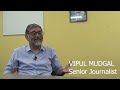
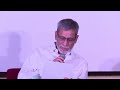
Dr. Vipul Mudgal : Vipul Mudgal has been a journalist, activist, and media educator in India, the UK and South East Asia. He currently heads Common Cause, a New Delhi–based civil society watchdog known for democratic interventions, advocacy, research, and policy engagement.
As an activist and a media scholar, he writes and works at the intersection of media, democracy, and political violence. He has conducted extensive research and delivered lectures and seminars at universities of Oxford, Cambridge, Yale, Brown, Leicester, Massachusetts, DU and Jamia, among others.
Prof. (Dr) Mahesh Rangarajan : Mahesh Rangarajan is an environmental historian, political analyst, academic and author. He has taught environmental studies and history at Ashoka University and Krea University and served as the Vice Chancellor of Krea University. He was the Director of the Nehru Memorial Museum and Library from 2011-15.
Prof. Rangarajan has authored several books and papers on environment. Towards Co-existence was written in 2000 and India's Wildlife History, an Introduction followed soon after. Battles over Nature looks at the roots of present-day conservation conflicts in colonial India, while Making Conservation Work (2007) is about securing India's biodiversity in the new century.
Prof. Amita Baviskar : Amita Baviskar is a professor of environmental studies, sociology and anthropology. Her research and teaching address the cultural politics of environment and development with a focus on conflicts around natural resources. She is currently working on the politics of food and changing agrarian environments in Madhya Pradesh and studying the social experience of air pollution in Delhi.
Prof. Yogendra Yadav : Yogendra Yadav is an Indian activist, academic, psephologist and now a politician. His areas of interests include democratic theory, election studies, survey research, political theory, modern Indian political thought, and Indian socialism.
Prof. Yadav received his BA from Rajasthan and MA from JNU, New Delhi. He received an M. Phil from Punjab University, and later joined its Political Science department as faculty. Between 1995–2002, Prof. Yadav was the founder-convenor of the Lokniti network and its research programme on comparative democracy.
He is a former member of the Universities Grants Commission (UGC) and National Advisory Council on the right to Education Act (NAC-RTE) constituted by Ministry of HRD, in 2010. He supervised the writing of the new political science textbooks for secondary and senior secondary classes, as an advisor to NCERT. Yadav has authored numerous books and was awarded the Malcolm Adiseshiah Award for Distinguished Contributions to Development Studies. In 2009, he received the Global South Solidarity Award by the International Political Science Association (IPSA).
After a distinguished career in academics and psephology, and having been a political commentator on TV shows, Prof. Yadav joined several political movements after 2011. He joined Aam Aadmi Party briefly and resigned due to differences with its leadership. Yadav is a founder of Swaraj Abhiyan and a popular columnist.
Prof. Rajeev Bhargava : Rajeev Bhargava is a noted Indian political theorist, author, and academic who taught political theory at JNU, and was the Director of the Centre for the Study of Developing Societies (CSDS). He has written extensively on political theory, multiculturalism, identity politics and secularism.
Bhargava started his academic career at St. Stephen's College, Delhi in 1979, and the following year he JNU, where he taught till 2005. That year he joined CSDS as a senior fellow and served as its Director from 2007-14.
Over the years, he has taught ethics at Harvard University; been a fellow at University of Bristol and senior fellow at Institute of Advanced Studies, Jerusalem; fellow at Wissenschaftkolleg, Berlin; fellow, Institute of Human Sciences, Vienna, apart from teaching at the British Academy, Stanford University, Tsinghua University, China, and New York University.
Bhargava’s publications include Individualism in Social Science (1992), What is Political Theory and Why Do We Need It? (2010) and The Promise of India’s Secular Democracy (2010). His edited works are Secularism and Its Critics (1998) and Politics and Ethics of the Indian Constitution (2008). Bhargava is on the advisory board of several national and international institutions, and was a consultant for the UNDP report on cultural liberty.
Prof. Satish Deshpande : Satish Deshpande is an academic whose research interests are caste and class inequalities, contemporary social theory, and politics.
After stints at the CSDS, Institute of Economic Growth, and Hyderabad University, Deshpande currently teaches Sociology at the Delhi School of Economics. He began his academic career as a teacher of Economics but abandoned his first doctoral thesis for another in Sociology. He has a doctorate from the University of California, USA. His research interests include caste and class inequalities, contemporary social theory, politics and history of the social sciences and South-South interactions.
He is the author of Contemporary India: A Sociological View and has co-authored, edited and coedited books on caste, Hindu-Muslim violence, inclusion in Indian higher education, the disciplinary history of Indian sociology and social anthropology and untouchability in contemporary rural India. He has co-coauthored (with Ghanshyam Shah, Harsh Mander, Sukhdev Thorat, and Amita Baviskar) Untouchability in Rural India. He has edited problems of Caste (2014) and co-edited several volumes on issues of sociology, anthropology, exclusion, and sectarian violence. He researches caste and class inequalities in higher education and contemporary social theory.
Nitin Sethi : Nitin Sethi is a journalist and a member of The Reporters' Collective. He has been investigating, writing, and reporting for two decades at the intersections of India's political economy, natural resources, environment, climate change, economy, public finance, and development.
He has worked in editorial positions at The Business Standard, Scroll.in, The Hindu, The Times of India and Down to Earth. He is currently the media Lead at the National Foundation for India, where he oversees a fellowship program which supports more than 100 independent journalists annually in different Indian languages and formats. He is also an editorial advisor at Land Conflict Watch.
Nitin Sethi has written extensively on environmental issues, including biodiversity, resource conflicts and international climate negotiations. In 2019 Nitin Sethi published a six-part investigation on electoral bonds in HuffPost India. The ground breaking series, based on RTI documents obtained by information activist Lokesh Batra, unearthed the secretive nature in which the instruments were introduces, the concern expressed by regulatory agencies and several irregularities in how the government brought the notes into effect. In 2020, Sethi won the ACJ investigative journalism award for the series.
Founding Team of Inclusive Media for Change Project
Shambhu Ghatak : Shambhu Ghatak has worked as a senior associate fellow with Common Cause, New Delhi and coordinated the Inclusive Media for Change Project as a full-time researcher. His core strengths are number crunching, data journalism and research. While with IM4Change, he also organised media workshops and conferences. Apart from Inclusive Media for Change Shambhu provided research inputs for other projects at Common Cause, including the quarterly journal.
In his thirteen years with Inclusive Media for Change starting 2009, Shambhu wrote more than 300 news alerts, analyses, short reports and stories. He was responsible for setting up the website im4change.org, a unique website dedicated to mainstreaming the issues of India’s marginalised.
He also wrote two research reports for Inclusive Media for Change for the United Nations Development Programme (UNDP) – Planning Commission in 2015. Shambhu specialized in collation, analysis and presentation of complex data and has written critically acclaimed media articles and commentaries on food security, nutrition, public transport, skill development, livelihoods and budget analysis. He is passionate about data-based analyses and stories and takes special interest in issues related to food and nutrition security, water conservation, climate change and industrial policies.
Chandan Srivastava : Chandan Srivastava studied journalism at the Indian Institute of Mass Communication and pursued a PhD at the Indian Languages Centre at Jawaharlal Nehru University. In 2009 he joined the newly started Inclusive Media for Change project out of a belief that the mainstream media did not reflect the views of a majority of the population.
Chandan Srivastava worked with Inclusive Media for Change for a decade compiling stories and data points of neglected and marginalized communities and writing them up in Hindi for the website, thus helping to create one of India’s first and, till date, finest repository on rural India. At the same time there was a recognition that the mainstream media cannot be ignored totally. A more inclusive approach would be to find space to include the stories of the marginalized in the mainstream. Chandan, who was an associate producer at Sahara Samay, a national news channel, found that this approach closely meshed with his beliefs.
Chandan also wrote articles on contemporary issues for mainstream Hindi dailies and websites and taught sporadically at Delhi University. Another passion of his was to translate social science textbooks to Hindi. After working in Delhi for a decade Chandan joined the Hindi Department of the Jai Prakash University in Bihar as an assistant professor.