
HDI Overview


What’s Inside
http://hdr.undp.org/hdr4press/press/outreach/figures/HDI_T
http://hdr.undp.org/hdr4press/press/outreach/figures/GII_T
http://hdr.undp.org/en/media/PR1-main-2013HDR-ENG.pdf
http://hdr.undp.org/en/media/PR5-RBAPregional-SouthAsia-20
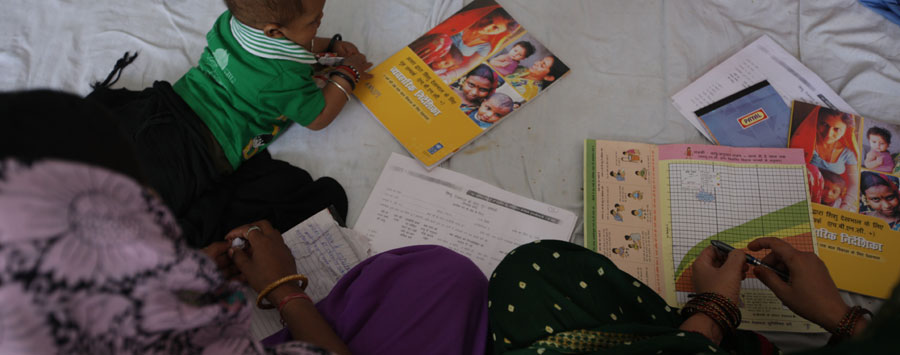
• During 2012 India ranked 136th (HDI value 0.554) among 187 countries in terms of HDI, whereas Pakistan ranked 146th (HDI value 0.515), China ranked 101st (HDI value 0.699), Sri Lanka ranked 92nd (HDI value 0.715) and Bangladesh ranked 146th (HDI value 0.515). India fares worse than the average global value of 0.694. • Despite India’s progress, its HDI of 0.554 is below the average of 0.64 for countries in the medium human development group, and of 0.558 for countries in South Asia. • India's ranking in terms of Gender Inequality Index was 132nd (GII value 0.610) in 2012, whereas in the same area Pakistan ranked 123rd (GII value 0.567), China ranked 35th (GII value 0.213), Sri Lanka ranked 75th (GII value 0.402) and Bangladesh ranked 111th (GII value 0.518). • The HDI’s Multidimensional Poverty Index, an alternative to income-based poverty estimates, shows the proportion of the population living in multidimensional poverty is high throughout South Asia, with the highest rates in Bangladesh (58 percent), India (54 percent), Pakistan (49 percent) and Nepal (44 percent). • China and India doubled per capita economic output in less than 20 years—a rate twice as fast as that during the Industrial Revolution in Europe and North America. • By 2020, the Report projects, the combined output of the three leading South economies—China, India, Brazil—will surpass the aggregate production of the United States, Germany, United Kingdom, France, Italy and Canada. • Although South Asia has reduced the proportion of the population living on less than $1.25 a day from 61 percent in 1981 to 36 percent in 2008, more than half a billion people there remained extremely poor. • India has averaged nearly five percent income growth a year over 1990–2012. But per capita income is still low, around $3,400 in 2012. To improve living standards, it will need further growth. And India’s performance in accelerating human development is less impressive than its growth performance. • Brazil, China, India, Indonesia and Mexico now have more daily social media traffic than any country except the United States. • In 2010, India’s trade to output ratio was 46.3 percent, up from only 15.7 percent in 1990. Foreign direct investment also reached a peak of 3.6 percent of gross domestic product (GDP) in 2008, up from less than 0.1 percent in 1990. In 2011, eight of the world’s biggest corporations on the Fortune 500 list were Indian. • By 2030, more than 80 percent of the world’s middle class will live in the South and account for 70 percent of total consumption expenditure. The Asia-Pacific region alone will host about two-thirds of that middle class.
• Child labour is relatively high in Nepal, where more than one-third of children of ages five to 14 years are economically active. The lowest is observed in India (12 percent).
Please click here to access the article entitled Human Development Index Trends, 1980-2012 prepared by the Economic and Political Weekly, April 20, 2013 VolXxlviii, No 16, |
Rural Expert




Write Comments